Google Ads vs SEO: Which Is Better for Your Business?
This is the question every South African business owner asks once they have a website: do I pay Google for traffic, or earn it? The answer is usually "both, in this order" — but the order matters more than the split.
The fundamental difference
Google Ads is renting attention. It works within hours and stops the day you stop paying. SEO is buying attention. It takes months and keeps working after you stop investing. Neither is better; they solve different problems.
| Google Ads | SEO | |
|---|---|---|
| Time to first lead | Same day | 1 – 6 months |
| Cost model | Per click, forever | Upfront effort, then free |
| Stops when you stop | Immediately | Gradually, over months |
| Trust from users | Lower (marked "Sponsored") | Higher |
| Best for | Urgent, testing, seasonal | Long-term, compounding |
What Google Ads actually costs in South Africa
Cost per click varies enormously by industry. Low-competition local services might be R3 to R12 a click. Competitive categories — attorneys, insurance, medical, finance — can run R40 to R150 a click and higher.
Do this maths before you spend a cent: if clicks cost R20, and one in ten enquires, and one in three enquiries becomes a customer, each customer costs R600 in ads. If your average job is R800, you are working for Google. If it is R9,000, you should be spending more.
The number that matters: not cost per click, not click-through rate — cost per paying customer. Most businesses that "tried Google Ads and it didn't work" never calculated it, so they couldn't tell a bad campaign from a good one.
When to choose Google Ads
- You need leads this week.
- You are testing whether there is demand before investing in SEO.
- Your service is urgent — burst geysers, towing, locksmiths, emergency callouts.
- Your business is seasonal and you want to appear only in season.
- Your margins comfortably absorb the cost per customer.
When to choose SEO
- You are playing a long game and can wait a few months.
- Your customers research before buying — attorneys, builders, consultants.
- Ad costs in your category are brutal.
- You want an asset that keeps producing after you stop paying.
The sequence that works
For most South African small businesses: fix the fundamentals first, then run modest ads while SEO builds, then taper ads as organic rankings hold.
"Fundamentals" means a website that converts and a complete Google Business Profile. Running ads to a website that doesn't convert is the most expensive mistake in this article — you pay for every click and waste most of them. Fix the destination before you buy the traffic.
The free option most businesses skip
Before spending anything, claim the free traffic sitting in the Map Pack. Local SEO costs nothing but time and, for a local service business, frequently out-performs a modest ad budget. Start there, measure, then decide whether you need to buy traffic at all.
Recent work
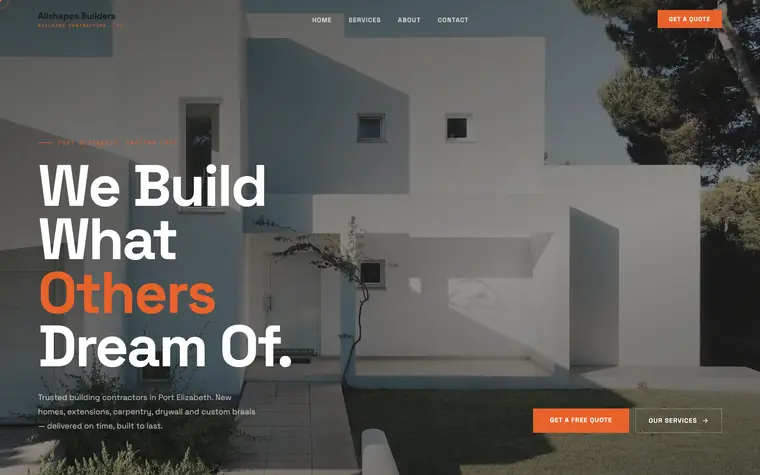
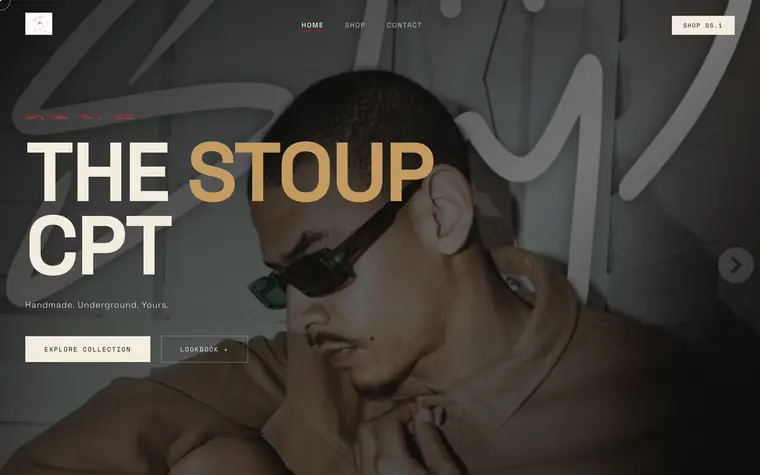
Every one of these was designed in full before the business paid anything.


Related reading
- How Much Does SEO Cost in South Africa? (2026)
- How to Get on Google's First Page in South Africa
- 15 Small Business Marketing Ideas for South Africa
- Local SEO South Africa: Rank in Your Own Suburb
Want a website that actually wins clients?
We build it first — you only pay when you love it. Every quote is tailored to your project.
⚡ Get My Instant QuoteBuilding something bigger — a mobile app, a CRM or custom software? Those are scoped and quoted per project.
Frequently asked questions
Is Google Ads worth it for a small business in South Africa?
It depends entirely on your average customer value. If a customer is worth thousands of rands, ads are usually worth it. If your average job is a few hundred rands and clicks cost R20 or more, the numbers rarely work — focus on local SEO and reviews instead.
How much should I spend on Google Ads per month?
Start small enough to learn without pain — often R2,000 to R5,000 a month for a local business — and only scale once you know your cost per paying customer. Never scale a campaign you haven't measured properly.
Can I do SEO and Google Ads at the same time?
Yes, and it is often the smartest approach. Ads generate leads immediately while SEO builds over months. As organic rankings improve, many businesses reduce ad spend and keep it only for their most profitable services.
Do Google Ads help my SEO rankings?
No. Paying for ads has no direct effect on organic rankings — Google keeps them separate. Ads can indirectly help by generating traffic, brand searches and data about which keywords convert, which you can then target organically.
About the author. Andy Njiokwuemegi is the founder of Andritha Online (Pty) Ltd (reg. 2026/735468/07), which designs and builds websites, online stores, mobile apps and custom software for businesses in South Africa and abroad. Every website is built in full before the client pays.