What Pages Does Your Website Actually Need?
Most small business websites have either three pages when they need eight, or twenty when they need five. Here is what actually earns its place, and what each page has to do.
The five that nearly every business needs
1. Home
Its only job is to answer three questions within seconds: what do you do, who do you do it for, and what should I do next. Say it plainly at the top — "Cape Town's trusted renovation contractor" beats "Welcome to our website" every time. Then a clear button, a trust signal, and a summary of services.
2. Services
One page per major service if you can. A single page listing everything competes for nothing in search and helps nobody. Each page should cover what the service includes, who it suits, roughly what it costs or how pricing works, and a way to get in touch.
3. About
The most under-rated page on any small business site, and often the second most visited. People buy from people — especially for services entering their home or handling their money. Use real photos of real staff, say how long you have been doing this, and why you started. Skip the corporate voice; nobody believes "we are a dynamic solutions provider".
4. Portfolio or gallery
Proof beats claims. Before and after photos, finished projects, real jobs. For trades this is frequently the page that closes the deal — people want to see work like theirs. Ours is at our portfolio, and every entry is a live site.
5. Contact
Every method, plainly visible: phone as a tappable link, WhatsApp, email, and a short form. Include your area or address and your hours. If you serve specific suburbs, list them — it helps customers and it helps local search.
Worth adding when relevant
- Pricing — even a range. Hiding all pricing loses more enquiries than it protects.
- Testimonials — with names and locations; anonymous quotes read as invented.
- FAQ — answers your sales questions before they are asked, and wins long-tail searches.
- Blog — only if you will actually maintain it. A blog with one post from 2023 signals abandonment.
- Areas served — valuable for service-area businesses.
The legal pages
A privacy policy is expected under POPIA if you collect any personal information — and a contact form counts. If you sell online, add terms and conditions and a refund policy; payment gateways check for them before approving you.
Rule of thumb: if you cannot say what a page is for in one sentence, it should not exist. Extra pages dilute attention and give visitors more chances to wander off without contacting you.
What to leave out
- A splash or welcome page. An extra click before the real site, for nothing.
- "Our Mission and Values" as a standalone page. Nobody reads it. Weave it into About.
- A news page you will never update.
- A gallery of stock photos. Worse than no gallery — it reads as having nothing real to show.
How the pages should connect
Every page needs a next step. Services link to Contact. Portfolio links to Services. Home links everywhere. A visitor should never reach the bottom of a page and find no obvious action. That single principle separates sites that generate enquiries from sites that just exist — see why your website gets no enquiries.
How many pages, really?
For most South African small businesses: five to eight. Enough to cover your services properly and rank for several things, few enough that every page stays sharp. A focused five-page site beats a sprawling twenty-page one almost every time.
Recent work
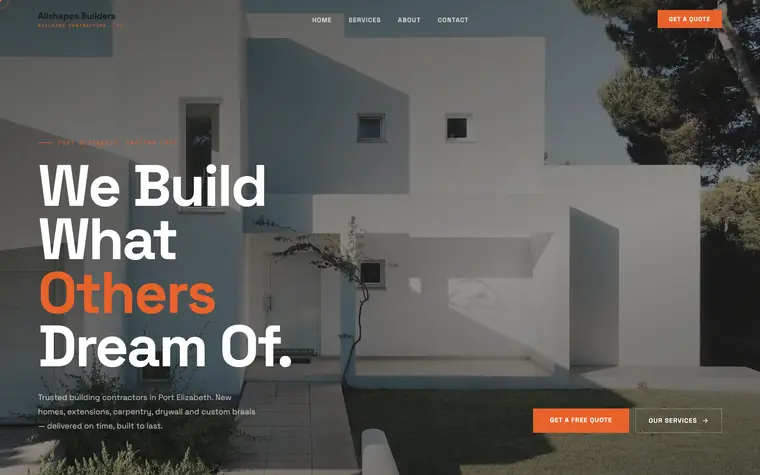
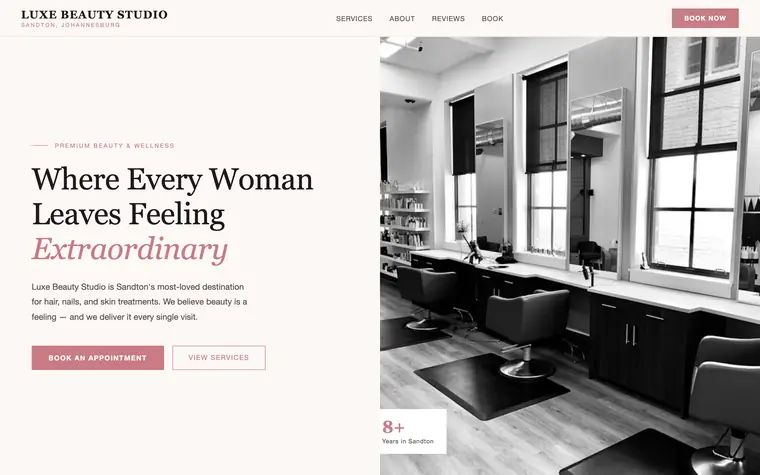
Every one of these was designed in full before the business paid anything.


Related reading
- Website Brief Checklist: What Your Designer Needs
- Why Your Website Isn't Getting Enquiries: 7 Leaks
- How Much Does a Website Cost in South Africa? 2026
- Mobile-First Web Design: Is Your Site Phone-Ready?
Want a website that actually wins clients?
We build it first — you only pay when you love it. Every quote is tailored to your project.
⚡ Get My Instant QuoteBuilding something bigger — a mobile app, a CRM or custom software? Those are scoped and quoted per project.
Frequently asked questions
How many pages should a small business website have?
Most South African small businesses do well with five to eight pages: home, one page per major service, about, portfolio and contact. Quality and clarity matter far more than quantity.
Do I need a blog on my website?
Only if you will maintain it. A regularly updated blog helps SEO and answers customer questions, but an abandoned blog with a single old post signals neglect. If you can't commit, a good FAQ page delivers much of the benefit.
Should I put prices on my website?
Usually yes, at least a starting price or range. Many buyers filter out businesses that hide pricing entirely, and vague pricing generates unqualified enquiries that waste your time as well as theirs.
Do I need a privacy policy on my South African website?
If you collect any personal information — including through a contact form — you should have a privacy policy explaining what you collect and why, in line with POPIA. Online stores also need terms and conditions and a refund policy.
About the author. Andy Njiokwuemegi is the founder of Andritha Online (Pty) Ltd (reg. 2026/735468/07), which designs and builds websites, online stores, mobile apps and custom software for businesses in South Africa and abroad. Every website is built in full before the client pays.